
Troubleshooting · Updated September 2026
AC Not Cooling? Start Here.
Five minutes of free checks before you pay a diagnostic fee — then the likely causes, in the order Fort Worth techs actually find them.
Quick answer
If your AC is running but not cooling, check the thermostat settings, the filter, the breaker, and the condensate float switch first — these four solve a surprising share of no-cooling calls for free. Past that, the usual Fort Worth culprits are a failed capacitor ($150–$400), low refrigerant from a leak ($300–$1,200 with repair), or a frozen coil from restricted airflow.
The Free Five-Minute Checks
- Thermostat. Set to "cool," set 3–4° below room temperature, and if it takes batteries, try fresh ones. Smart thermostats that lost Wi-Fi or ran a bad update are a real 2026 failure mode
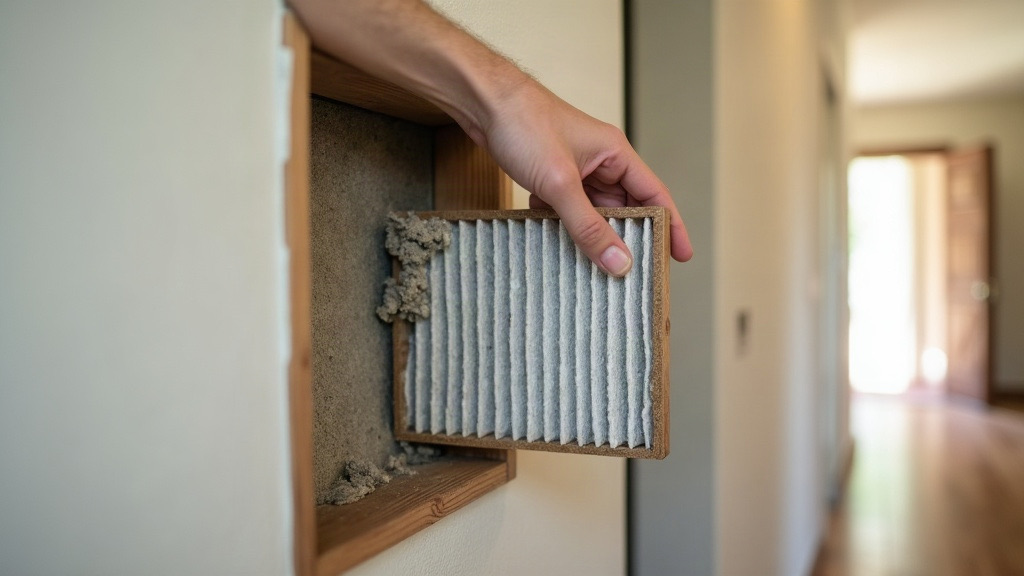
- Filter. A completely clogged filter chokes airflow and can ice the coil solid. In Fort Worth's dust, filters load faster than the package claims — if you can't see light through it, replace it and give the system a few hours
- Breaker and disconnect. Check the AC breakers in your panel (one trip happens; a breaker that trips again immediately means stop and call) and make sure the outdoor disconnect block is fully seated
- Float switch. If the condensate drain clogged — common in Texas humidity — a safety switch kills the system to protect your ceiling. A full drain pan means the switch did its job; the drain needs clearing
- Vents. Walk the house. Closed or blocked supply vents in unused rooms raise duct pressure and reduce total airflow
If That Didn't Fix It: The Likely Causes
Outdoor unit humming, fan not spinning: the classic failed capacitor. The capacitor gives the fan and compressor their starting jolt; Fort Worth's sustained 100° heat cooks them. This is the single most common summer repair — $150–$400, usually same-day.
Both units running, but the vents blow warm or lukewarm air: usually low refrigerant from a slow leak. Refrigerant isn't consumed — if it's low, it leaked. An honest repair finds and fixes the leak before recharging; figure $300–$1,200 total. A "top-off" with no leak repair means you'll pay again next summer.
Weak airflow, ice on the copper line: frozen evaporator coil, usually from restricted airflow (that clogged filter) or low refrigerant. Turn the system off, run fan-only to thaw (2–4 hours), replace the filter. If it refreezes, it needs gauges and a licensed tech.
Outdoor unit silent, indoor blower running: the condenser has no power or a dead contactor — the switch that starts it. Contactor replacement runs $150–$350.
System short-cycling on 100° afternoons: could be an overheating compressor, a failing capacitor on its way out, or high head pressure from a filthy condenser coil. Rinsing the outdoor coil gently with a garden hose (power off, no pressure washer) is a legitimate DIY step.
When to Stop Troubleshooting and Call
The line is simple: anything involving refrigerant, electrical diagnosis, or opening the equipment needs a licensed tech. Texas requires a TDLR license for air conditioning work — verify any company at tdlr.texas.gov. If the house is getting dangerous — indoor temps climbing with elderly family, infants or medical needs — treat it as an emergency and see our emergency guide for what the after-hours premium should look like. Otherwise, book a normal-hours diagnostic ($75–$200, usually credited to the repair) through our AC repair guide — it covers what the fix should cost so the quote doesn't surprise you.
FAQ
AC Not Cooling FAQ
Why is my AC running but not cooling the house?
Most often: a failed capacitor (outdoor fan not spinning), low refrigerant from a leak, a frozen coil from a clogged filter, or a tripped float switch from a clogged condensate drain. The free checks — thermostat, filter, breaker, drain pan — solve a real share of calls before any tools come out.
Is it worth paying a diagnostic fee, or should I just replace the unit?
Pay the diagnostic. The most common no-cooling failures cost $150–$700 to fix — a fraction of replacement. Be suspicious of any company whose "diagnostic" arrives with a full replacement quote already written before they've measured anything.
How long can I run a frozen AC to try to fix it?
Don't. Running a frozen system can slug the compressor with liquid refrigerant and turn a $300 problem into a $2,000 one. Turn cooling off, run the fan to thaw, replace the filter, and only restart once the ice is fully gone.
Why does my AC struggle specifically on 100° afternoons?
Some struggle is physics: every system has a design temperature, and above it the house creeps up a few degrees. But a system that holds 75° at 95° outside and fails at 104° often has a marginal capacitor, dirty condenser coil, or borderline refrigerant charge that extreme heat exposes. Worth a tune-up before the peak.
How much does it cost to fix an AC that's not cooling in Fort Worth?
Diagnostic $75–$200 (usually credited to the repair), then $150–$400 for a capacitor, $150–$350 for a contactor, $300–$1,200 for leak repair plus recharge, or $300–$700 for a motor. Our repair guide has the full table.
Still Not Cooling? Call Now
24/7 — speak with a local specialist now
Call (254) 223-6277Free to call, no obligation. We connect you with Fort Worth-area HVAC companies — see ourdirectory and privacy policy.
Know What the Repair Should Cost First
The AC repair guide prices every common failure — so the quote you get doesn't surprise you.